

Whether you’re preparing for a physical fitness test or simply want to be fitter, your running improves with a regular, balanced plan. Running more isn’t enough on its own; the right variety and recovery make the difference.
Contents
1. Base runs: Easy pace
Most of your weekly runs should be at an easy pace where you can talk comfortably. These runs develop your aerobic capacity and prepare your body for harder training. If you’re just starting, begin with walk-run intervals.
2. Interval training
Interval training combines short, fast sections with slow recovery sections. For example: 6–8 reps × 1 minute of fast running, with 1–2 minutes of walking or easy jogging in between. One interval session a week develops speed and endurance together.
3. Tempo runs
A 15–25 minute run at a pace that feels “comfortably hard”, where talking becomes difficult but the pace is sustainable. It helps your body hold a higher pace for longer.
4. Strength training
Strong leg, hip and core muscles support running economy and reduce the risk of injury. Include these exercises 2 days a week:
- Squats and lunges
- Romanian deadlift
- Calf raises
- Plank and side plank
- Single-leg balance work
5. Recovery and gradual increases
Suddenly increasing your weekly running time or distance is one of the most common causes of injury. Increase gradually and plan a lighter week every few weeks. Sleep and nutrition are the basis of recovery; for details, see our articles on sleep and muscle growth and hydration.
Treadmill or outdoors?
Both work. A treadmill makes it easier to control pace and time and doesn’t depend on the weather. Running outdoors helps you adapt to different surfaces and slopes. If your test takes place outdoors, do part of your preparation outside.
If you experience chest pain, dizziness, shortness of breath or joint pain that doesn’t go away, stop running and talk to your doctor.
Running and endurance training in Gaziantep
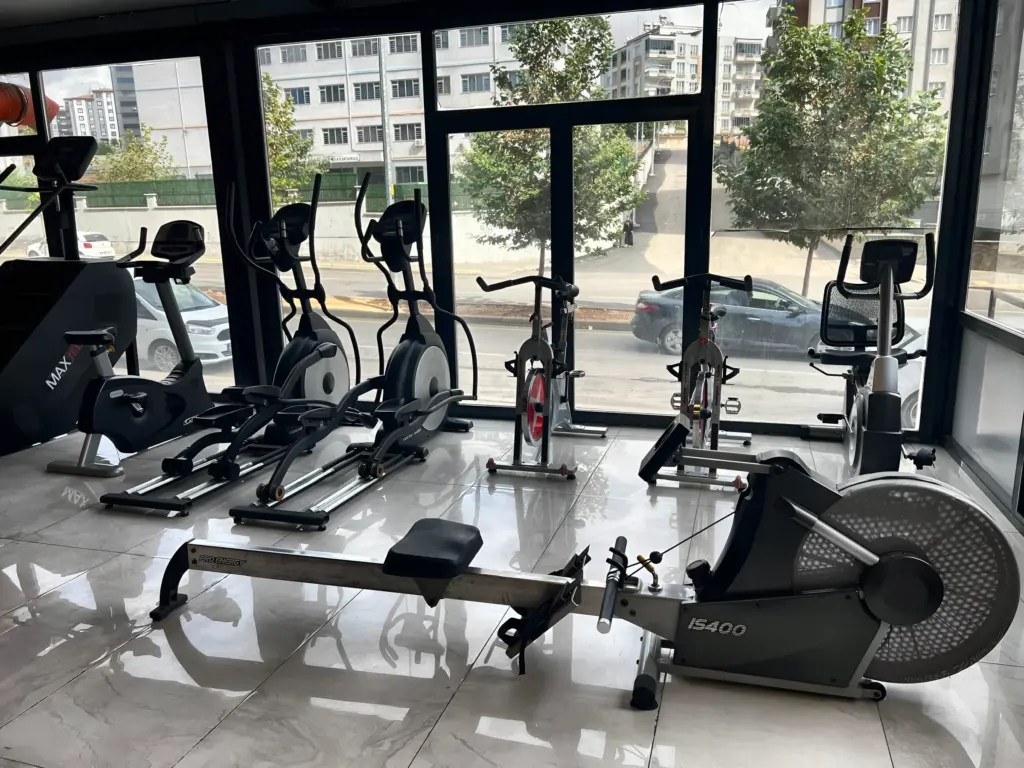
At our Volume Fit Plus Belkıs (Gazikent) gym, the glass-fronted cardio area has treadmills, ellipticals, exercise bikes and rowing machines. If you’re preparing for a physical test, see our physical test preparation guide.
Frequently asked questions
How long does it take to improve your running?
With regular training you’ll notice it getting easier and improving within a few weeks. Significant progress takes a few months of planned training.
Is it right to run every day?
For beginners, running every day can increase the risk of injury. Three or four runs plus two strength sessions a week is a more balanced plan.
Should I stretch before running?
A dynamic warm-up (easy jogging, leg swings) is better before running. Static stretching after running is the more common recommendation.
